
.jpg)
I. Introduction
With the rapid development of architectural membrane structures, water treatment, aerospace, and other fields, ETFE-PTFE composite membranes have emerged as ideal structural materials due to their superior light transmittance, weather resistance, chemical corrosion resistance, and high strength. However, significant differences in physical properties and thermal lamination parameters between ETFE and PTFE membranes often result in insufficient interlayer bonding strength and thermal damage during lamination processes. Consequently, developing novel lamination techniques to enhance interlayer bonding strength and thermal bonding quality holds critical engineering significance.
II. Analysis of Lamination Challenges
Material Property Discrepancies
◦ ETFE: Dense non-porous structure with high light transmittance and chemical resistance, but limited thermal bonding temperature range.
◦ PTFE: Porous structure with exceptional high-temperature resistance and chemical stability, requiring specialized equipment and processes for bonding.
Process Parameter Control
◦ Temperature: ETFE bonds at 290–340°C vs. PTFE above 340°C.
◦ Pressure & Duration: ETFE requires ~10N pressure and 10–15 cm/min speed; PTFE demands higher pressure and prolonged duration.
◦ Temperature Uniformity: Uneven heating causes thermal damage or weak bonding.
Interlayer Bonding Issues
◦ Traditional high-temperature/pressure methods induce thermal degradation.
◦ Mismatched thermal expansion coefficients generate internal stresses, compromising bond integrity.
III. Experimental Study
Materials & Equipment
◦ Materials: ETFE/PTFE membranes, FEP film strips (reinforcement).
◦ Equipment: Shanghai Puxiong PTFE/ETFE series professional laminators.
Methods
◦ Tested constant-temperature vs. gradient-temperature heating profiles.
◦ Implemented "gradient heating + intermittent pressure" method with optimized initial temperature, heating rate, pressure cycles, and force.
◦ Evaluated peel strength via standardized peel tests.
Results & Analysis
◦ Constant-temperature: Low bonding strength and severe thermal damage.
◦ Gradient-temperature: Improved strength but residual stresses.
◦ Gradient + Intermittent Pressure: Highest bonding strength, minimal thermal damage, and reduced stress.
IV. Novel Process Design
Principles
◦ Gradient Heating: Stepwise temperature increase minimizes thermal shock.
◦ Intermittent Pressure: Stress relief via phased pressure application.
Optimized Parameters
◦ Initial Temperature: Lower threshold of ETFE/PTFE bonding range.
◦ Heating Rate: Material-specific to ensure uniformity.
◦ Pressure Cycles: Data-driven iteration for strength/durability balance.
Advantages
◦ Enhanced bonding strength with fewer defects.
◦ Reduced thermal degradation prolongs service life.
◦ Broad adaptability across material combinations.
V. Conclusion
This study addresses ETFE-PTFE composite lamination challenges through a "gradient heating + intermittent pressure" strategy, experimentally validated to significantly improve bond quality while mitigating thermal damage. Future work should focus on parameter refinement and novel reinforcement materials to advance multi-layer membrane processing technologies.
.jpg)
In the construction field, the heat-sealing production methods for different new membrane materials vary depending on…
.jpg)
In the construction field, the heat-sealing of PVDF membrane materials is mainly achieved through processes such…
.jpg)
Due to its unique molecular structure and excellent overall performance, PVDF (polyvinylidene fluoride) membrane material is…
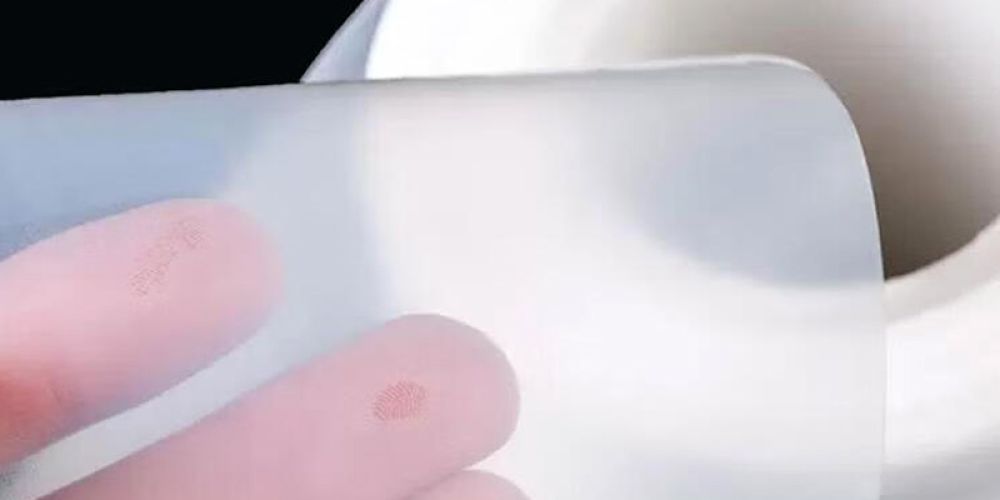
Chemical Inertness: Virtually unreactive with almost all chemical substances; resistant to acids, alkalis, and organic solvents…
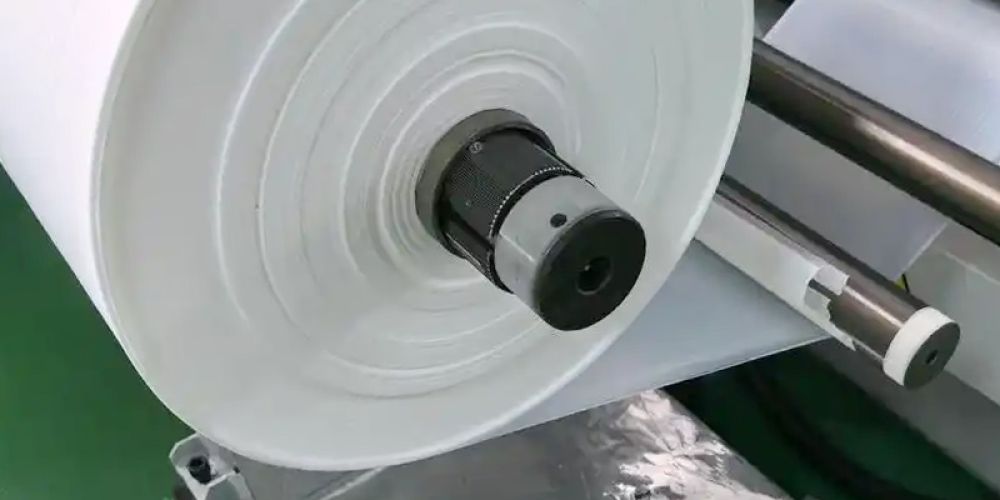
PTFE (polytetrafluoroethylene) film is a high-performance engineering plastic film renowned for its excellent chemical stability, high-temperature…
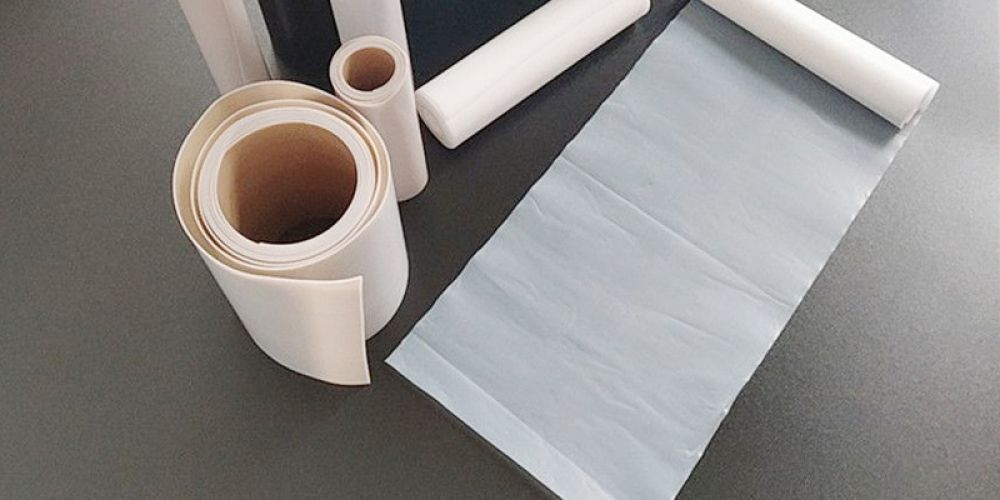
Microporous Structure Porosity exceeds 85%, with 1.4 billion micropores per square centimeter and pore sizes ranging…