• info@chinapuxiong.com

BLOGS

All Blogs

What are the types of architectural membrane structures

Membrane Structure Applications in Building Facades and Walls
Membrane structures offer diverse application forms in building facades and walls. Based on structural configurations and design characteristics, they can be primarily categorized as follows:


I. Classification by Structural Form

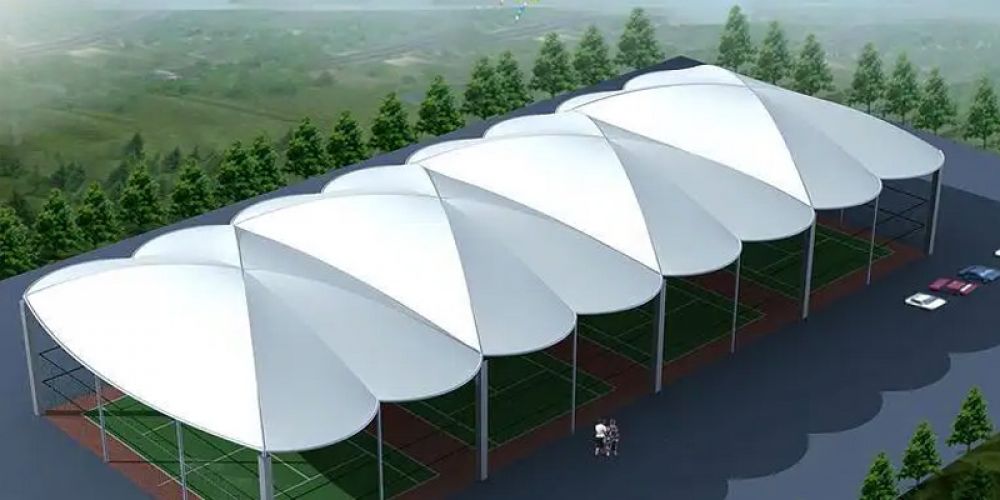
1. Skeleton-Supported Membrane Structure

  • Features: Utilizes steel frameworks or composite materials as roof skeletons, with membranes stretched over them. Features high structural stability, simple roof shapes, flexible opening designs, and cost-effectiveness.
  • Application: Suitable for spaces of any scale, such as stadiums and exhibition centers.
    • Example: The spectator canopy of Shanghai Stadium uses a composite PTFE-coated glass fiber membrane system.

2. Tensioned Membrane Structure

  • Features: Composed of membranes, steel cables, and columns. Tension forces are introduced via cables and supports to form stable configurations, enabling creative and aesthetic designs.
  • Application: Ideal for architecturally iconic buildings like art centers.
    • Example: The Shed art center in New York employs a retractable ETFE membrane shell movable on tracks.

3. Air-Inflated Membrane Structure

  • Features: Membranes are anchored to roof perimeters, supported by air pressure differences via ventilation systems. Enables large spans with quick construction but requires continuous airflow.
  • Application: Temporary or rapid-deployment structures like event pavilions.

II. Classification by Design Features and Applications

1. Light-Transmitting Energy-Efficient Membrane

  • Features: High-transparency materials (e.g., ETFE) reduce lighting needs and energy consumption.
  • Application: Natural-lit buildings like sports venues.
    • Example: The Water Cube facade uses over 3,800 ETFE air cushions with light-filtering dots.

2. Artistic Form Membrane

  • Features: Curvilinear and fluid designs with integrated lighting for modern visual appeal.
  • Application: Cultural and commercial landmarks.
    • Example: The LV Osaka flagship store features translucent curved membranes resembling sails.

3. Multi-Functional Composite Membrane

  • Features: Combines membranes with shading, ventilation, or soundproofing technologies.
  • Application: Transportation hubs and industrial facilities.
    • Example: The Anaheim Transportation Center uses ETFE cushions for both light diffusion and spatial aesthetics.

III. Classification by Membrane Material

1. ETFE Membrane

  • Features: Lightweight, high light transmission, weather-resistant, and self-cleaning.
  • Application: Stadiums, greenhouses, etc.
    • Example: The Bird’s Nest Stadium uses semi-transparent ETFE for soft light diffusion.

2. PTFE Membrane

  • Features: High strength, durability, and fire resistance for permanent structures.
  • Application: Large public infrastructure.
    • Example: Beijing Xierqi Subway Station’s PTFE roof creates lantern-like illumination at night.

3. PVC Membrane

  • Features: Cost-effective and easy to fabricate but less durable.
  • Application: Temporary structures like commercial canopies.
    • Example: PVC membranes are used for lightweight, modern street coverings.