
.jpg)
Detailed Properties and Advantages
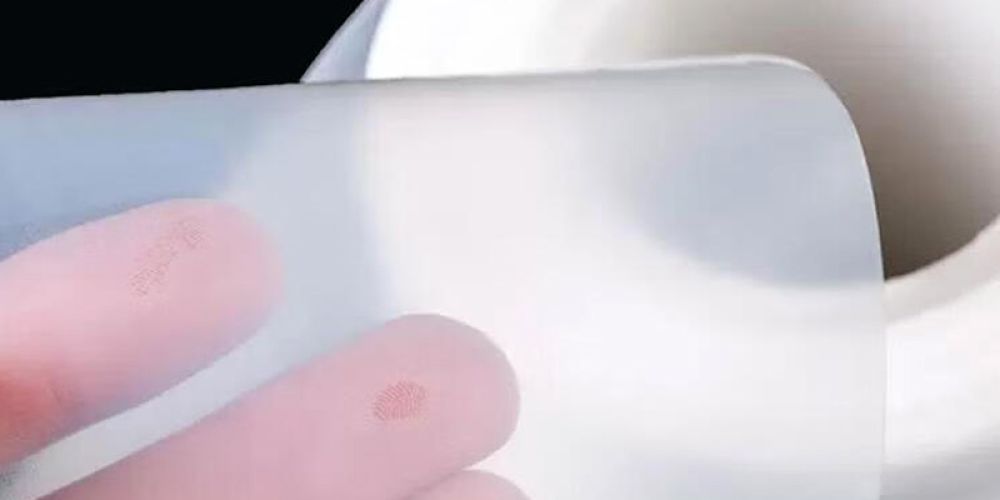
Excellent Light Transmittance: Light transmittance reaches 90-95%, with selective ultraviolet light transmission, providing unparalleled visual clarity.
Extremely Lightweight: Weight per unit area is only 1% of that of glass of the same area, requiring minimal supporting structure and significantly saving steel.
Excellent Durability: Extremely weather-resistant, UV-resistant, chemically resistant, with a wide operating temperature range (-200°C to 150°C), and a service life of over 25 years.
Self-Cleaning: Very smooth surface, highly hydrophobic (low coefficient of friction), rainwater can wash away most dirt.
Mechanical Properties: High tensile strength, with an elongation of over 400%, excellent toughness, and superior tear and impact resistance.
Environmentally Friendly: Can be prefabricated into rolls, welded on-site, generating minimal construction waste; and is recyclable.
Core Application Form: Air Cushion Structure
This is the most classic and revolutionary application of ETFE, perfectly leveraging all its advantages:
Structural Principle: 2-5 layers of ETFE film are welded at their edges to form one or more closed "air cushions," which are then maintained at a constant internal pressure (typically 250-750 Pa) through an inflation system.
Advantages of Air Cushion Structures:
Superior Thermal Insulation: The multi-layered air gap forms an effective insulation layer, with insulation performance far superior to single-layer glass or films.
High Structural Rigidity: The internal air pressure keeps the film taut, capable of withstanding significant wind and snow loads.
Flexible Design: Can be made into various three-dimensional curved surfaces to achieve complex architectural shapes.
Intelligent and Controllable: The air pressure within the air cushion can be adjusted to adapt to different loads; patterns can even be printed between double-layered air cushions, or the shading rate can be adjusted to achieve dynamic shading.
.jpg)
In the construction field, the heat-sealing production methods for different new membrane materials vary depending on…
.jpg)
In the construction field, the heat-sealing of PVDF membrane materials is mainly achieved through processes such…
.jpg)
Due to its unique molecular structure and excellent overall performance, PVDF (polyvinylidene fluoride) membrane material is…
Chemical Inertness: Virtually unreactive with almost all chemical substances; resistant to acids, alkalis, and organic solvents…
PTFE (polytetrafluoroethylene) film is a high-performance engineering plastic film renowned for its excellent chemical stability, high-temperature…
Microporous Structure Porosity exceeds 85%, with 1.4 billion micropores per square centimeter and pore sizes ranging…