
.jpg)
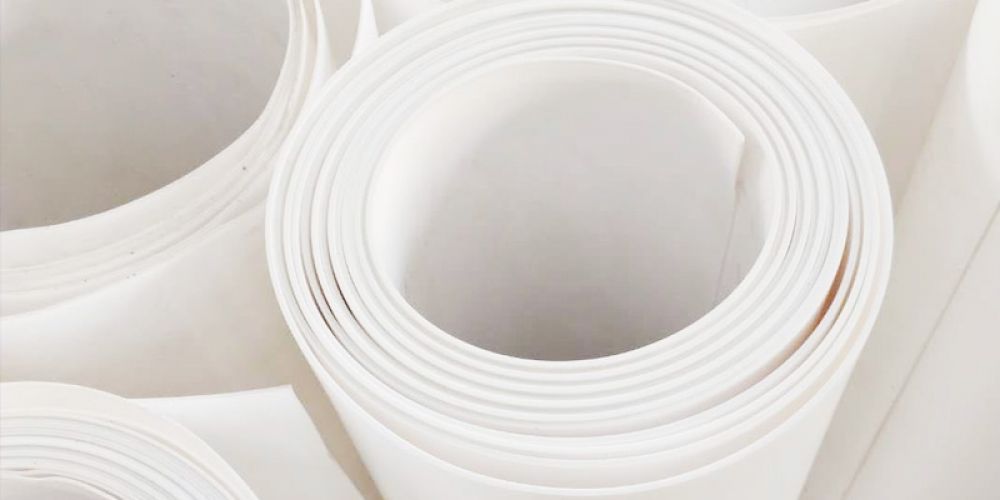
PTFE (polytetrafluoroethylene) membranes are widely used in architectural membrane structures, chemical corrosion protection equipment, and environmental filtration due to their excellent corrosion resistance, high and low temperature resistance, self-cleaning properties, and optical properties. However, PTFE has a high melting point and high melt viscosity, making it difficult to achieve effective bonding using traditional melting methods. Therefore, heat sealing welding technology has become the core means to solve the bonding problem of PTFE membranes. The following is a detailed introduction to PTFE membrane heat sealing welding technology:
I. Technical Principle Heat sealing welding of PTFE membranes involves heating the coating or surface polymer material of the membrane to melt. Under pressure, the polymer chains in the molten area diffuse, penetrate, and entangle with each other, forming a molecular-level bond. After cooling, the molten area solidifies, and two or more membranes are firmly connected. The key to this process is precise control of heating temperature, pressure, and time to ensure that the strength of the weld joint reaches or even exceeds that of the membrane itself.
II. Main Process Classifications High-Frequency Welding
Principle: Utilizes high-frequency electromagnetic waves to heat the membrane material. It is highly efficient and suitable for large-area welding in factories or on-site.
Applications: Primarily used for welding PVC films, and can also be used for large-area connections of some PTFE composite films.
Hot-press welding
Principle: The welding areas of the two workpieces to be welded are placed between metal welding blades, pressed down from above and below, and heated while pressing to fuse the weld.
Applications: Suitable for connections between PTFE sheets and between sheets and pipes. Welding methods include lap welding and butt welding, and can be used to manufacture complex parts such as container covers, branch pipes, and reducing tees.
Characteristics: High weld strength. When the welding temperature reaches (385±5)℃ and the pressure is 1~2MPa, the weld strength is about 90% of the base material strength, and the peel strength can reach about 1.5MPa.
III. Key Process Parameter Control
Temperature: The welding temperature of PTFE membrane materials needs to be precisely controlled near the melting point (approximately 260℃). For high-temperature processes such as gradient sintering welding, the temperature needs to reach above 380℃. Excessive temperature can easily lead to material decomposition and the generation of toxic gases; insufficient temperature will prevent melting, affecting weld strength. Pressure: The applied pressure needs to be adjusted according to the membrane thickness and welding method, typically between 0.1 and 0.5 MPa. Excessive pressure can lead to brittle welds, while insufficient pressure will result in a weak bond.
Time: Welding time is directly proportional to material thickness. Taking hot-press welding as an example, the holding time for a 2mm thick PTFE sheet needs to be controlled at 5-10 minutes to ensure sufficient diffusion of molecular chain segments. During the cooling stage, the temperature should be lowered slowly to avoid cracking of the joint due to thermal expansion and contraction.
PTFE (polytetrafluoroethylene) membranes are widely used in architectural membrane structures, chemical corrosion protection equipment, and environmental…
.jpg)
The high-frequency heat sealing machine for membrane materials mainly consists of a high-frequency generator, a heat…
.jpg)
A high-frequency heat sealing machine for membrane materials is a specialized device that uses high-frequency electromagnetic…
**Fast Heating and High Efficiency:** High-frequency heat sealing machines utilize high-frequency electromagnetic fields to locally heat…
.jpg)
High-frequency heat sealing machines for membrane materials have wide applications in membrane architecture, covering multiple fields…
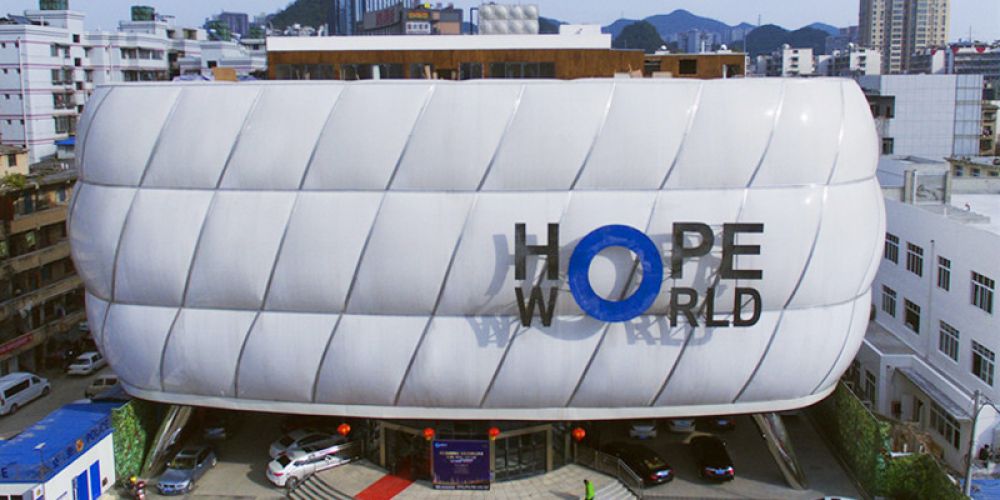
In membrane architecture, the application scope of high-frequency heat sealing machines for membrane materials covers the…