
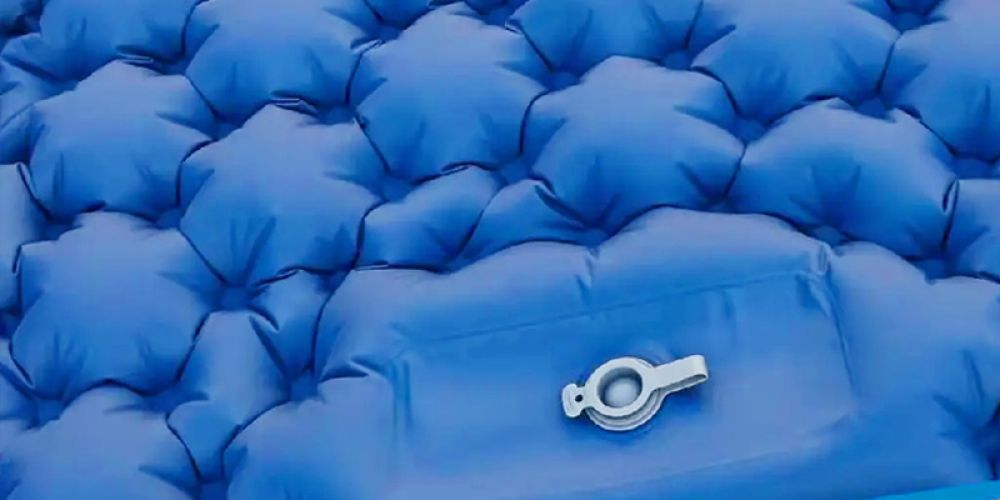
In the sealing of inflatable structures, the heat-sealing process fuses material contact surfaces through high-temperature heating, creating a seamless, airtight structure. Key applications include joining inflatable membrane structures, sealing cushioning air-cushion films, and fusing sealing strips for inflatable doors. The technology offers advantages in terms of enhanced airtightness, durability, and production efficiency, though it requires strict control over temperature, pressure, and material compatibility. Detailed descriptions of these applications and technical advantages follow:
I. Key Application Scenarios
Joining Inflatable Membrane Structures
Inflatable membrane structures maintain their shape through air pressure differentials; their airtightness depends on the quality of the heat-sealed joints between membrane materials. For instance, in the production of large inflatable exhibition models (such as cartoon bear inflatables), high-strength PVC-coated fabric is joined via heat sealing to form a stable, airtight structure. The strength of the heat-sealed joints and the integrity of the weld directly impact the structure's airtight performance; parameters such as temperature, pressure, and dwell time must be matched to the material properties to prevent air leaks or seam ruptures.
Sealing Cushioning Air-Cushion Films
Cushioning air-cushion films (such as packaging bubble wrap) utilize heat-sealed lines to partition the material into multiple air-retention cells, ensuring that the cushioning function remains intact even if individual cells deflate. In this context, the heat-sealing process incorporates specific design features:
Optimization of heat-seal line geometry: Straight, wavy, or sinusoidal seal lines are employed, with rounded corners to prevent scratching the packaged items.
Anti-backflow design at inflation ports: A T-shaped heat-seal configuration is applied at the inflation port to create dual channels, effectively reducing the port size and minimizing the risk of pressure loss due to backflow.
Fusing Sealing Strips for Inflatable Doors
Inflatable doors achieve a tight fit against the door frame by injecting compressed air into a sealing strip; the connection between the strip and the frame relies on heat-sealing technology. For example, once a pressure sensor within the frame detects that the door is closed, the controller activates the heat-sealing mechanism to fuse the sealing strip to the frame edge, creating a flexible sealing barrier. The process requires ensuring that the thermal expansion coefficient of the sealing strip material (e.g., graphene-reinforced rubber) matches that of the door frame material to prevent seal failure caused by temperature fluctuations.
II. Technical Advantages
Enhanced Sealing and Durability
Seamless Connection: The heat-sealing process bonds materials through molecular fusion, eliminating gaps associated with stitching or adhesive bonding and significantly improving the moisture and dust resistance of inflatable structures. For instance, inflatable sealing doors retain elasticity across a temperature range of -60°C to 150°C while resisting acid/alkali corrosion and UV radiation.
Wear-Resistant Design: Heat-sealed structures lack mechanical connection points, reducing wear caused by frequent inflation/deflation or vibration, thereby extending service life. For example, cushioned air-cell films utilize heat-sealed lines to partition air storage units; localized damage does not compromise overall functionality.
Optimized Production Efficiency and Environmental Friendliness
Efficient Processing: Heat sealing features rapid heating and short welding times, making it ideal for large-scale automated production. For example, inflatable film structures used in outdoor exhibitions require rapid assembly; heat sealing reduces splicing time and boosts construction efficiency.
No Adhesive Pollution: Unlike traditional adhesive bonding, which may release volatile organic compounds (VOCs), heat sealing achieves a seal through physical fusion, meeting environmental standards.
Adaptability to Complex Structural Requirements
Flexible Material Compatibility: Heat sealing is compatible with various flexible materials—such as PVC, PU, and TPU—meeting requirements for lightweight, light-transmitting, or elastic inflatable structures. For example, ultra-soft expanded PTFE fiber membranes achieve light and air permeability via heat sealing while maintaining a secure seal.
3D Structural Forming: Precise control of heat-sealing temperature and pressure enables the sealing of complex curved surfaces. For instance, inflatable film structures serving as load-bearing components rely on heat-sealing technology for the precise sealing of curved seams.
III. Control of Key Process Parameters
Temperature Control
Heat-sealing temperatures must be adjusted according to the material's melting point to avoid weak bonds caused by insufficient heat or material damage caused by excessive heat. For instance, when processing PU-coated fabrics via thermal lamination, a polyurethane-based hot-melt adhesive must be selected, and the heating temperature must be controlled to remain above the adhesive film's softening point but below the material's decomposition temperature.
**Synergy Between Pressure and Time**
Appropriate pressure facilitates intimate contact between materials, while the heat-sealing duration must ensure sufficient material melting. For example, flat-plate heat sealing is widely used in packaging production; parameters for pressure and time must be optimized based on material characteristics—such as those of polypropylene or polyethylene—to balance seal strength with production efficiency.
**Material Compatibility**
Different materials respond differently to high-frequency electric fields; therefore, materials with compatible dielectric properties must be selected for heat sealing. For instance, high-frequency heat sealing is better suited for films prone to thermal deformation, whereas ultrasonic sealing is appropriate for heat-sensitive materials.
In the sealing of inflatable structures, the heat-sealing process fuses material contact surfaces through high-temperature heating…
.jpg)
In the field of architecture, various new membrane materials are widely used due to their unique…
.jpg)
In the construction field, the heat-sealing production methods for different new membrane materials vary depending on…
.jpg)
In the construction field, the heat-sealing of PVDF membrane materials is mainly achieved through processes such…
.jpg)
Due to its unique molecular structure and excellent overall performance, PVDF (polyvinylidene fluoride) membrane material is…
Chemical Inertness: Virtually unreactive with almost all chemical substances; resistant to acids, alkalis, and organic solvents…